Results after 1 year since go-live

Decrease in Patient Check-in Time

Sheets of Paper Saved

Users Successfully Onboarded Day 1

Patients protected with HPV vaccines
Key Takeaways
- Dramatic efficiency gains: Patient check-in time reduced by 86%, improving clinic throughput and staff productivity
- Significant paper reduction: Over 233,000 sheets eliminated, supporting secure, digital public health workflows
- Seamless EHR implementation: 125 users onboarded on day one with full system adoption in just 3 months
- Improved patient outcomes: 1,347 patients protected with HPV vaccines through more efficient immunization workflows
- Stronger data management: 42,244 labs documented electronically, enhancing accuracy, accessibility, and reporting compliance
- Public health-focused technology: Purpose-built EHR enabled MPHD to streamline operations, support grant requirements, and scale community care delivery
Background
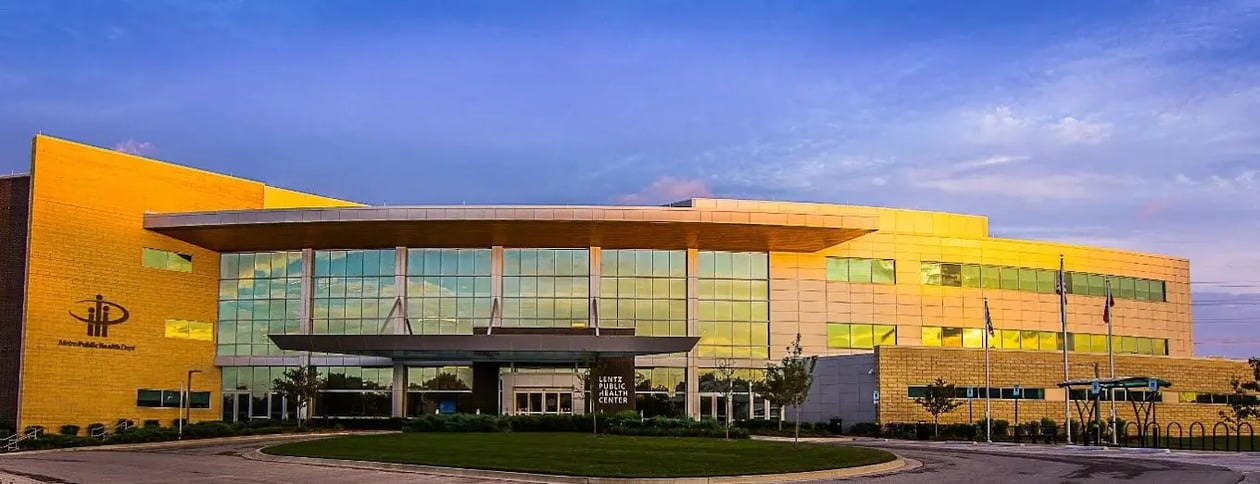
Metro Public Health Department (MPHD) in Nashville and Davidson County delivers a wide range of essential public health services to the community, including family planning, immunizations, sexual health services, PrEP care, pharmacy services, and breast and cervical screening programs. Dr. Laura Varnier, Bureau Director for Clinical Services and Director of Nursing, oversees these programs and the clinical teams that deliver them. When Dr. Varnier joined MPHD in 2018, she discovered the department was still operating with paper records. MPHD selected Patagonia Health as their EHR vendor. Implementation took 3 months. This case study examines Dr. Varnier and her team’s experience, 1 year since go-live.
Challenges
For decades, paper-based workflows created inefficiencies and risks across both clinical and administrative processes. Patient intake required multiple forms, manual documentation, and repeated charting. Staff often had to enter the same information in multiple places, slowing operations and increasing administrative burden.
“It would take us sometimes 15 to 20 minutes to check in a patient” - Laura Varnier, Bureau Director of Clinical Services/Director of Nursing
Paper records also raised serious security and continuity concerns. Dr. Varnier expressed: “There are safety concerns with just having paper that anyone could just easily take and walk away with if they wanted to...We were really lucky that we didn’t lose any paper records, but if we had, what would be the process for us to get that information back?” Beyond operational and safety challenges, MPHD needed a system that could support public health reporting requirements, grant-funded programs, and specialized clinics. Many EHR vendors are built for ambulatory needs or hyper-focused on hospital care, and simply do not understand public health needs.
“When we were talking to other vendors… we just weren’t speaking the same language.” - Dr. Varnier
Before Patagonia Health
-
Patients received multiple paper forms to complete in-clinic, slowing down the process.
-
Staff manually entered information into billing systems and paper charts and spent hours looking for records.
-
Lab results arrived on paper and had to be manually hole-punched and filed.
-
Immunization data had to be written by hand and cross-referenced with the state registry.
Solution
MPHD selected Patagonia Health because the platform was designed specifically for public health departments with features such as:
- Program codes tied to grant funding
- Staff can scan patient IDs and documentation directly into the EHR.
- Sliding fee scales
- Public health reporting requirements
- Specialized clinic workflow
Implementations of this scale always come with challenges, but MPHD approached the process with a strong commitment to tackling them head-on. With support from Patagonia Health’s dedicated implementation team and close collaboration throughout the project, the timeline was significantly accelerated. While the initial expectation was 6 months, the project was successfully completed in just 3.
After Implementing Patagonia Health
-
Staff can scan patient IDs and documentation directly into the EHR.
-
Lab results now arrive electronically and can be reviewed and tracked within the EHR.
-
Eliminated the need for manual filing and retrieval.
-
Continued support after go-live through regular project meetings, system improvements, and responsive communication.
"It has been one of the most rewarding experiences of my public health career to say I was part of this implementation." - Dr. Varnier
Results
The impact of Patagonia Health was immediate for Metro Public Health Department, allowing staff to serve more patients with less strain. Providers gained clearer access to data, documenting over 42,000 labs electronically, while improved workflows supported immunizations for more than 2,300 patients and connected 143 individuals to preventive screening services. The shift to digital records also reduced paper use, saving the equivalent of 28 trees, all while successfully onboarding 125 users on day one. Ongoing support reinforced confidence as evidenced by Dr. Varnier’s quote:
“There’s never been a time that I send an email and don’t get a response...that transparency makes everyone feel like, okay, I've got a great product.” - Dr. Varnier
Conclusion
In its first year after implementation, Patagonia Health’s EHR supported nearly 24,000 patients, improved operational efficiency, modernized clinical workflows, and reduced reliance on paper across Metro Public Health Department. For Nashville’s clinical leadership, the transition represented more than a technology upgrade. It was a major step forward in how the department serves its community.
When asked to describe Patagonia Health, Dr. Varnier summarized the experience simply:
"Comprehensive. Supportive. Innovative. Ever-Improving. Transformational." - Dr. Varnier
Download the Case Study Here