
When the COVID-19 pandemic swept the United States, it exposed the fault lines of health inequality with devastating clarity. Nationally, life expectancy dropped by roughly 2.7 years between 2019 and 2021. For American Indian and Alaska Native (AIAN) populations, that reduction was 6.6 years — more than double the national average. And critically, this was a population that already had the lowest life expectancy of any major racial and ethnic group in the country.
That single statistic captures something important: the health disparities facing Native American communities are not a new crisis. They are the compounded result of historical trauma, chronic underfunding, geographic isolation, and systemic inequity, layered over generations. Understanding them requires more than a list of health outcomes. It requires understanding who Native nations are, how their relationship to the U.S. healthcare system was formed, and what it will actually take to change course.
Key facts at a glance:
- American Indians have the highest rates of type 2 diabetes of any major racial or ethnic group in the U.S.
- The Indian Health Service (IHS) has the lowest per capita healthcare funding of any major federal program — lower than Medicare, the VA, and even the federal prison system
- As of 2024, 24.4% of AIAN adults age 18 and older report being in fair or poor health.
Accurate Terminology for Native Americans
Before going further, it's worth pausing on language. Terms like "Indigenous," "Native American," "American Indian," and "Alaska Native" are often used interchangeably, but they don't always refer to the same people.
Indigenous and Native are the most inclusive terms, encompassing a global population across hundreds of distinct cultural systems and languages. Native American, American Indian, and Alaska Native are more specific to the United States — the latter appears frequently in U.S. policy and federal datasets. The separation between "American Indian" and "Native American" reflects distinct policy histories and governmental relationships. American Indians and Alaska Natives are usually grouped in medical research, and will be referenced together in this article.
The most precise (and often most preferred) identifier is tribal affiliation: being a citizen of the Lumbee Tribe, the Navajo Nation, the Eastern Band of Cherokee Indians, and so on. For the purposes of this article, we use "American Indian/Alaska Native" and "Native American" in their policy-relevant sense, while recognizing that there are 575 federally recognized tribes in the United States, plus more than 200 tribes recognized by their states, each with its own history, culture, and governance.
What Is a Native Nation?
To understand Native American healthcare, you first have to understand what a Native nation actually is. Healthcare policies for these communities operate through a governmental relationship, not simply a demographic one.
This framing matters because it establishes two pillars that define every Native nation: the relationships people have with each other (kinship) and with their land (place). Tribal sovereignty (the right of Native nations to govern themselves) predates the U.S. federal government. This is the foundation on which all of Native American healthcare policy rests.
Historical Context
Treaty Rights and the Legal Right to Healthcare
One of the most consequential and least-understood facts about Native American healthcare is this: American Indians and Alaska Natives have a legal right to healthcare — one rooted in treaty obligations, the U.S. Constitution, and the government-to-government relationship between tribes and the federal government. In a country where healthcare is not generally considered an inherent right for citizens, this is a unique and significant legal standing.
For many tribes, access to healthcare was part of the exchange when they ceded land to the United States government. The federal government's responsibility to provide adequate care to American Indians is not a discretionary policy choice — it is a treaty commitment.
Traditional Healing Practices
Traditional healing among Native Americans integrates spirituality, nature, and holistic approaches. Today, traditional and Western medicine are increasingly understood not as opposites, but as complementary frameworks.
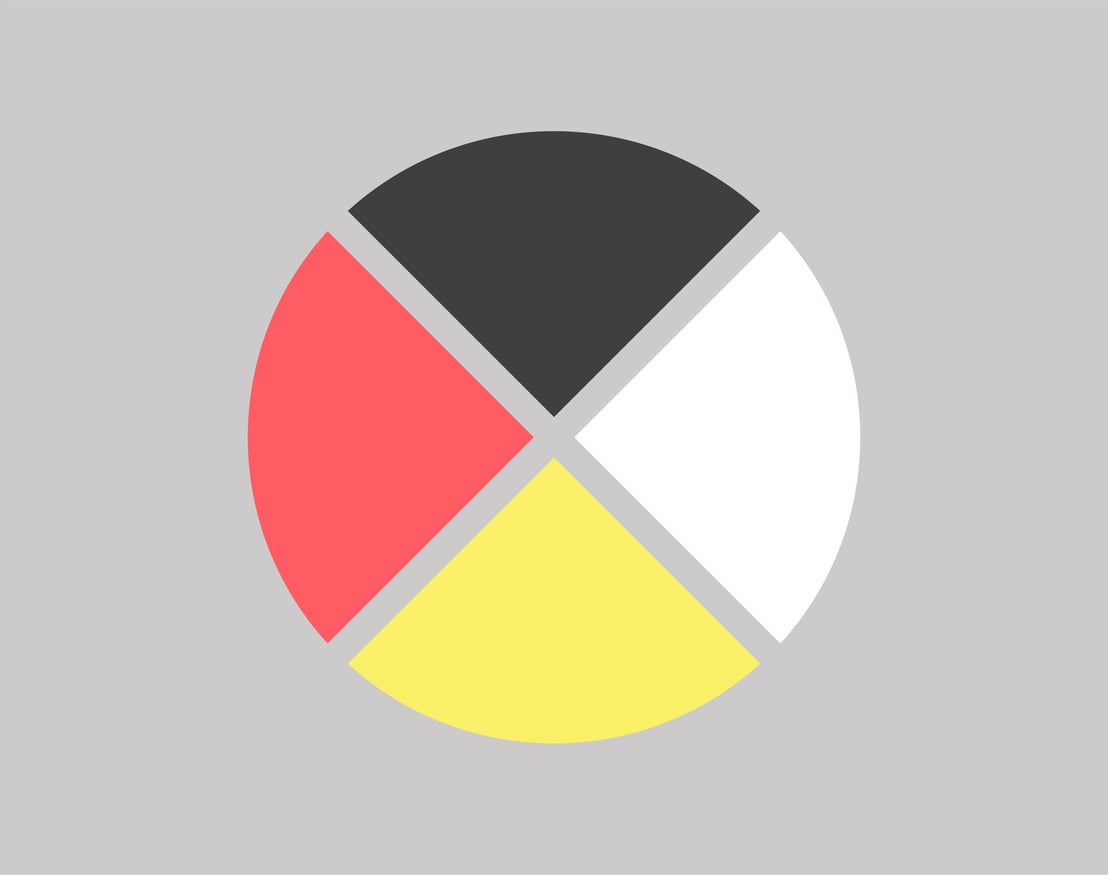
A useful way to understand the Native approach to health is through the medicine wheel, an iconic framework used across many tribal communities in North America. In communities throughout North Carolina and beyond, the medicine wheel represents four interconnected dimensions of health: mental, emotional, physical, and spiritual.
The key insight of the medicine wheel is that these dimensions cannot be separated:
"Even though we might study physical aspects of health, we also understand that there are emotional, mental, and spiritual aspects... What's the emotional, mental, and spiritual disparity around health? How does it affect our people — the individual? The community that they belong to?" Ryan Dial, University of North Carolina
This shows an expansion of what health means and it has direct implications for how healthcare providers should engage with Native patients and communities.
The Current State of Native American Healthcare
The Indian Health Service
The Indian Health Service (IHS) is the primary federal provider of healthcare for Native Americans, delivering medical, dental, and mental health services across reservations, tribal communities, and urban Indian health programs.
The IHS has produced some of the country's most effective public health interventions. The Special Diabetes Program for Indians, now more than 30 years old, has driven documented reductions in end-stage renal disease, diabetes-related deaths, hemoglobin A1C levels, and blood pressure. This demonstrates what adequate funding and culturally grounded programming can achieve.
Key Health Disparities
Health disparities among Native Americans are extensive and well-documented. A Kaiser Family Foundation analysis found that American Indian and Alaska Native people fare worse than non-Hispanic White people across the majority of examined health measures, including chronic disease, mortality, mental health, and access to care.
Diabetes is perhaps the starkest example. About 15% of American Indian adults have diabetes — the highest rate of any major racial or ethnic group in the U.S. The Gila River Pima population in southern Arizona has the highest prevalence of diabetes of any population group in the world, a legacy of disruptions to traditional food systems and the influx of high-fat, high-sodium commodity foods.
"The Hopi, the Pima, the Navajo — they were the canary in the coal mine. It was seeing these kids who had a phenotype of diabetes that didn't look like what you would normally see in an adolescent." Dr. Ronny Bell, University of North Carolina
Disparities are also significant in cardiovascular disease and stroke, prostate and lung cancer, liver and gastric cancer, sexually transmitted diseases (HIV, gonorrhea, chlamydia, hepatitis B and C), and substance use and overdose — what is increasingly referred to as the overdose crisis in Indian Country.
In North Carolina specifically, data from the 2024 NCDHHS Health Disparities Report shows that Native infants are twice as likely to die in their first year of life, and Native adults are 1.6 times more likely to die from heart disease, stomach cancer, or kidney disease compared to non-Hispanic White populations.
Barriers to Healthcare Access
Geographic and Economic Isolation
Many reservations and tribal territories are located in remote areas with limited healthcare infrastructure. Distance translates directly into delayed or foregone care — and for communities with high poverty rates, transportation costs compound the problem. Telehealth and mobile clinics represent meaningful partial solutions, though broadband access remains a significant barrier in many tribal communities.
It's also worth noting that Native Americans are not only a rural population. More than 70% of American Indians and Alaska Natives live in urban areas, and urban Indian health programs — though chronically underfunded relative to their reservation counterparts — serve a significant share of the AIAN population. Disparities in access and outcomes follow Native people into cities as well as onto reservations.
Medical Mistrust
Mistrust of the healthcare system among Native Americans is historically grounded. For decades, Native communities have experienced exploitation in both medical care and research. One of the most prominent examples involves the Havasupai Tribe of northern Arizona, whose blood samples were used for research purposes without their consent.
"This exploitation leads to medical mistrust, which leads to inadequate care, which then leads to these negative health outcomes." - Dr Ronny Bell
Lack of Culturally Competent Care
Nearly one in five AIAN adults report experiencing race-based discrimination or unfair treatment in healthcare settings, according to the 2023 KFF Survey on Racism, Discrimination and Health. When providers lack cultural awareness, patients disengage — leading to delayed diagnoses, poor adherence, and worse outcomes.
Culturally competent care means more than sensitivity training. It means incorporating traditional practices alongside Western medicine, building relationships with cultural and tribal leaders, and designing care systems that reflect the values and needs of the communities they serve.
Systemic and Policy Barriers
Beyond individual encounters, systemic barriers persist at the policy level: IHS underfunding, administrative complexity, and insufficient Native representation in healthcare policymaking. These structural issues don't resolve on their own — they require deliberate policy reform and sustained advocacy.
Moving Toward Health Equity
Identifying barriers is a necessary first step, but the evidence base for what works is growing — and so are the opportunities to act on it. Progress requires simultaneous movement on several fronts: funding, technology, community trust, and self-governance.
Strategies for Improving Access
Meaningful progress requires several parallel tracks: IHS funding, expanded telehealth infrastructure, mobile health services for remote communities, and stronger transportation networks. Grant opportunities like the Rural Health Transformation Act allow states to distribute funds where they see fit – which can include tribal health clinics in rural areas.
The Role of Community Engagement
Engagement with Native communities is fundamentally different from outreach to other populations, because there is an additional layer: tribes are nations, with elected governments that represent their citizens.
"How you engage with Native people is very different than with other communities, because there's that extra layer — you're not just engaging with the people, but you also need to form a relationship with the nation that governs those people. The people have given that nation power through voting for council members, chairpersons, and chiefs to represent them." - Ryan Dial
For healthcare organizations seeking to build these relationships the practical advice is consistent: show up, be patient, and make sustainability your goal.
"The most sustainable relationships are the ones that show up in communities, make personal connections, and personal relationships. It doesn't happen overnight." - Ryan Dial

Data Quality for Native Communities
Any discussion of Native American health disparities must grapple with a significant limitation: the data we have is often incomplete, and sometimes actively misleading.
Racial misclassification is a persistent problem. In death certificate data, inpatient records, and outpatient medical records, it is not uncommon for Native patients to be recorded under a different racial category.
Many national datasets also exclude state-recognized tribes entirely, meaning communities like the Lumbee Tribe of North Carolina were largely absent from the research record until very recently.
In EHRs that prioritize health equity, a tribal affiliation field will be available in the patient demographics section. It supports selecting one or more tribal affiliations for a patient. Accurate, culturally responsible data collection is necessary for public health reporting, decision making, and caretaking.
Conclusion: The Path Forward
Native American healthcare is at a pivotal moment. And renewed national attention to health equity has created political conditions for reform that advocates have sought for generations.
For healthcare organizations working in or alongside tribal communities, the imperative is the same: build real relationships, support tribal self-determination, and design systems that serve the people who have waited the longest for equitable care.
Frequently Asked Questions
Why do Native Americans have a higher chance of poor health outcomes?
The causes are interconnected: historical trauma and displacement, chronic underfunding of the Indian Health Service, geographic isolation, high poverty rates, medical mistrust rooted in a history of exploitation, and inadequate representation in healthcare policymaking. No single factor explains the disparities; they are systemic and compounding.
What is the Indian Health Service?
The Indian Health Service (IHS) is a federal agency under the U.S. Department of Health and Human Services responsible for delivering healthcare to members of the 575 federally recognized tribes. It operates hospitals, clinics, and community health programs across the country though some suggest it is chronically underfunded relative to other federal healthcare programs.
What are 638 contracts in tribal health?
Under the Indian Self-Determination and Education Assistance Act of 1975 (Public Law 93-638), tribes can take compacts and contracts with the federal government to assume direct operation of IHS facilities. This gives tribes greater autonomy over their healthcare systems while maintaining federal funding — and has generally produced more culturally aligned, effective care.
What does culturally competent care mean for Native American patients?
It means healthcare that respects and incorporates traditional healing practices, employs providers trained in cultural awareness, engages tribal and community leaders in care planning, and builds trust over time rather than expecting it as a default. It also means recognizing that the medicine wheel's four dimensions — mental, emotional, physical, and spiritual — are all relevant to health outcomes.